Bittensor’s Bold Cleanup - Emissions Halted on 50+ Inactive Subnets
Bittensor co-founder Const confirms weekly subnet emission cleanups are now permanent policy, with over 50 subnets affected in the latest round.

Understanding the Announcement – What Happened
Bittensor co-founder Const announced that the network now pauses weekly emissions to subnets that have no miner distribution through active mechanisms or lack functional code.
The review runs every Monday on an ongoing basis. Subnets can be reinstated on a case-by-case basis once the issues that caused their removal are resolved.
Taostats first reported the list of affected subnets, which totals more than 50. Common traits among them include missing operational code and dormant registrations.
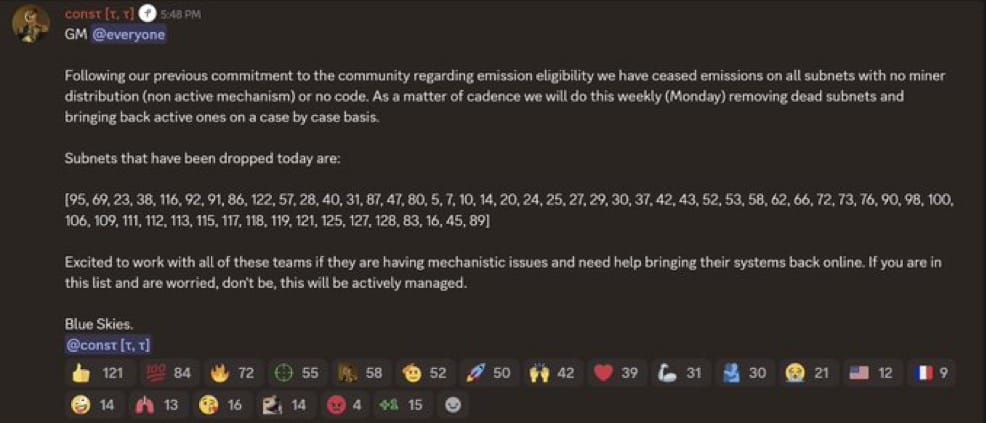
The weekly review isn’t a broad purge; it uses specific criteria, prioritizing subnets with no miner distribution or completely missing code. This distinguishes partially set-up but unused networks from those with no development at all.
This cadence fits Bittensor’s evolving emission framework, specifically the flow-based “Taoflow” mode. Under Taoflow, emissions reward active participation and real staking inflows, redirecting resources away from inactive subnets toward those with genuine engagement and utility.
Reasons and Strategic Rationale Behind the Cleanup
The policy addresses the buildup of subnets that consume registration slots and dilute emissions without contributing meaningful value to the ecosystem. Pausing emissions to these subnets prevents that resource fragmentation.
Redirecting emissions to active subnets strengthens incentives for miners, validators, and developers. High-potential projects now receive a larger share of daily TAO issuance, which rewards competitive, high-quality participation.
The cleanup supports Bittensor’s goal of building a decentralized AI marketplace, reinforcing merit-based systems like Dynamic TAO and Taoflow that favor subnets with real capital and usage over speculative ones.
The policy is also part of broader efforts to refine subnet de-registration and resource allocation. By temporarily removing underperforming projects, Bittensor frees up space for new subnets and ties registration more directly to ongoing activity.
Community Impact, Reactions, and Future Outlook
Initial community reaction has been mostly positive. Users describe the move as solid and bullish, noting that inactive subnets had been taking up space and diluting rewards.
Subnet owners of active projects benefit from higher emissions and visibility. Miners and validators can focus their efforts on productive networks. TAO holders may see improved network health as resources concentrate on viable AI applications.
Potential risks include the need for clear processes to avoid discouraging legitimate new subnet developers. Clear guidelines and support for emerging projects will help keep the network open to new entrants.
The cleanup could accelerate Bittensor’s growth as a decentralized AI platform. Higher-quality subnets and stronger emissions for active projects make the network more appealing to builders and investors.